On this page
What was censored
In 2018, DEMOS carried out the first national public opinion survey in Guinea-Bissau’s history. On 18 July, the EU Ambassador presided over the public presentation of its results in Bissau.
A follow-up study, from 2019 to 2022, turned the survey into a body of knowledge: data mining, a focus group study and a comparative review of public opinion across Africa. The work, led by DEMOS with dozens of researchers, took more than three and a half years. The European Union subsidized it; DEMOS and its partners bore about three quarters of its real cost.
It culminated in an edited volume, Voices of the People: Society, Politics and Public Opinion in Guinea-Bissau, edited by Miguel Carter and Carlos Cardoso, with ten scholars from Africa, Europe and the Americas.
In November 2021, two days after the EU Ambassador called it a “fantastic study”, the EU Delegation stopped its publication. The restrictions that followed still apply. The Portuguese volume may only be given away, not sold. No funds are available for its distribution. The English edition remains unpublished.
What the people said
- Widespread malaise, tied to precarious living conditions, perceived corruption and dissatisfaction with governance.
- Only half of citizens understand the word “democracy”. Yet most identify with its core values — a support wide in reach, uneven in depth.
- A strong national identity, shared by nine in ten citizens, alongside notable interfaith and interethnic tolerance.
Source: Voices of the People, Project Synopsis (DEMOS).
The Portuguese volume
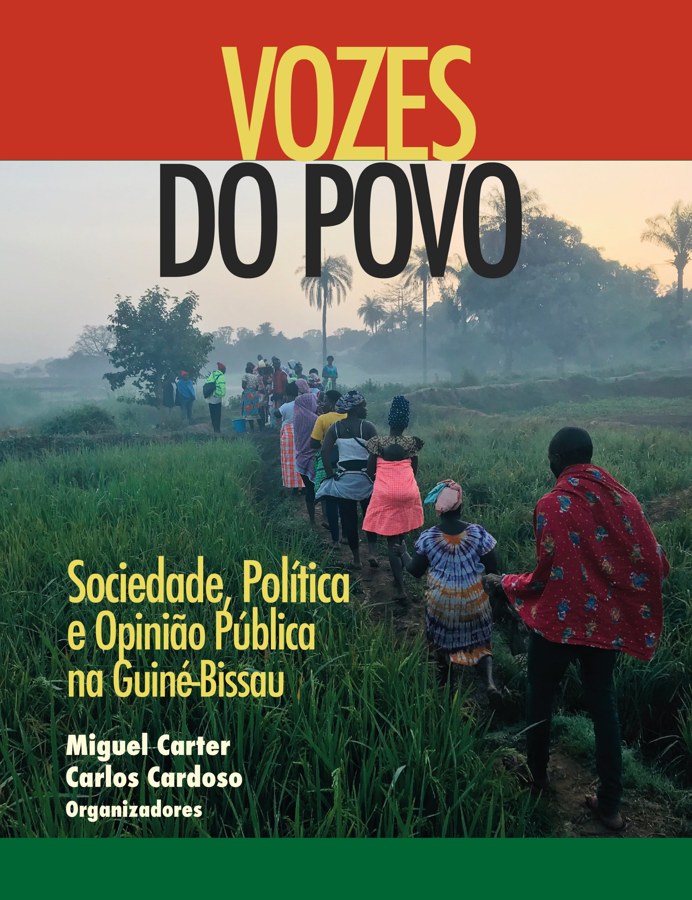
Vozes do Povo: Sociedade, Política e Opinião Pública na Guiné-Bissau
Miguel Carter and Carlos Cardoso, editors. DEMOS, 2024. 324 pages, 13 chapters in two parts, 161 graphs, tables and maps.
Printed in January 2024, more than two years late, and for free distribution only. Only five copies have reached Guinea-Bissau.
Contents, chapter by chapter
Chapter by chapter, for readers who want one chapter only. Titles in English; the texts are in Portuguese.
- Acknowledgements
- IntroductionMiguel Carter, Carlos Cardoso
Part I. Voices of the People: The Study and Results
- 1. Public opinion study in Guinea-Bissau: Highlights and methodologyMiguel Carter
- 2. Public life: Democracy, civic engagement and political partiesMiguel Carter
- 3. Social attitudes: Gender equality and interpersonal trustMiguel Carter
- 4. Ethnicity, politics and religion in a heterogeneous societyMiguel Carter
- 5. Popular perceptions about politics and societyMiguel Carter
- 6. Public opinion in Guinea-Bissau and West AfricaMiguel Carter
Part II. Analysis and Reflections
- 7. Ethnicity, religion and the popular history of powerToby Green
- 8. Life conditions, territory and social coexistenceMiguel Carter, Carlos Cardoso, Nafiou Inoussa
- 9. Gender relationsBirgit Embaló
- 10. Big man politics and regime instabilityMiguel Carter
- 11. State fragility and corruptionCarlos Cardoso, Ismael Sadilú Sanhá
- 12. Political parties, elections and citizen participationRui Jorge Semedo, Paulina Mendes
Conclusion
- 13. State-society disjuncturePhilip J. Havik, Joshua B. Forrest
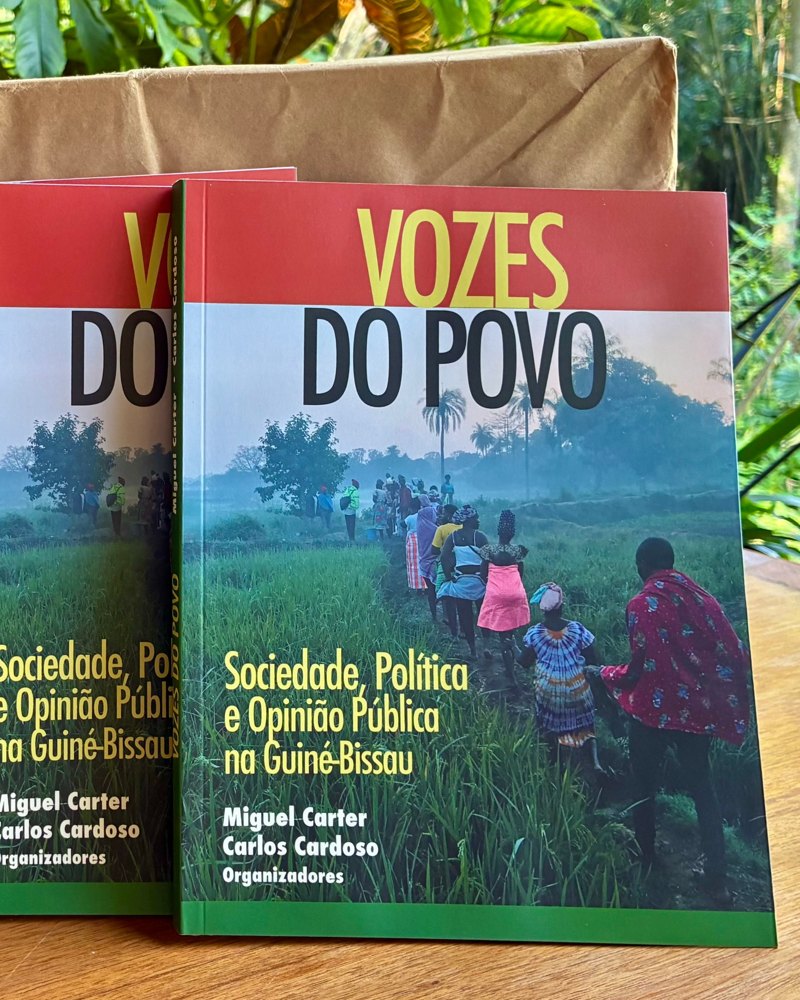
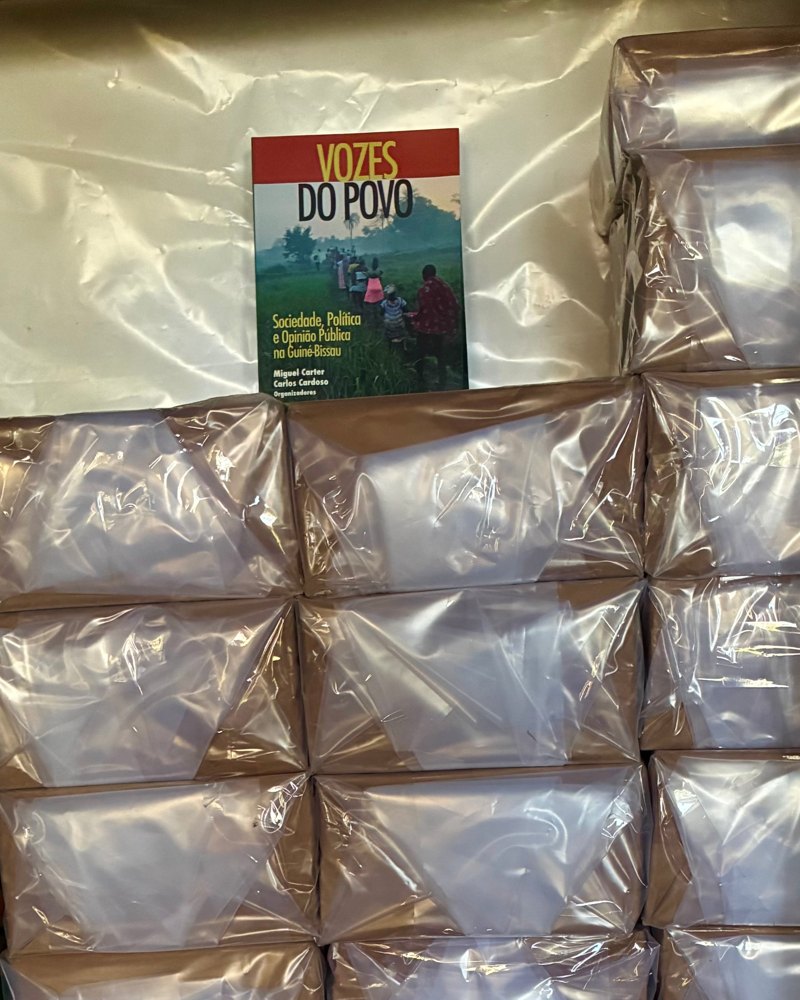
The finished book, and the stock that never left.More than 300 copies of Vozes do Povo, printed in January 2024, still wait in Paraguay to reach the people of Guinea-Bissau. Photos: Miguel Carter.
The English manuscript
The English edition was completed in early 2022, for submission to an academic press, as the contract provided. Under the condition the Commission imposed in 2023 — free distribution only — no academic press can take it on. Nearly five years on, it remains unpublished. It was made for the international community. Europe’s citizens subsidized it; Europe’s scholars, journalists and policymakers are among those still kept from it.
Two excerpts are posted here, so that readers can judge the work for themselves: the title pages, contents and Introduction, and Chapter 10, “Big man politics and regime instability”.
The full manuscript is available to researchers and journalists on request.
Research reports
The initiative produced more than a book. These studies are online, but were never published in book form: a trove of information on Guinea-Bissau that deserves more attention.
The first national poll, 2018
The results as presented in Bissau on 18 July 2018, in the presence of the EU Ambassador: 104 slides. The same day, Miguel Carter answered questions from the television and radio stations of Guinea-Bissau on what the survey had found.
Data mining and statistical analysis
Data mining of the national sample crafted 55 indexes, grouped in six themes, from support for democracy to the risk of religious sectarianism.
Focus group study
89 citizens in ten localities, October–November 2019: 16.5 hours of conversation, in Creole, Fula and Mandinga.
Comparative review of public opinion in Africa
Guinea-Bissau beside 17 African countries, from Afrobarometer data: 193 questions, 83,817 interviews and about 4.7 million data points.
Listening to the demos
Democracy rests on two pillars: the demos — the sovereign people in whose name the regime exists — and the kratos — the structures of power through which decisions are made. Scholarship and practice have long attended to the second and shortchanged the first. Institutions, laws and leaders are studied closely; what citizens think, value and do receives far less attention. Voices of the People was designed to help redress that imbalance. Understanding citizens’ perceptions, values, frustrations and aspirations is essential to building stable, inclusive and accountable institutions.
Reliable knowledge of what a society thinks is a public good, and access to it is a condition of an open society. Where such knowledge is scarce, the loudest voice prevails. Where it is abundant and public, claims can be tested, and citizens can recognise themselves in the record. Public opinion studies give ordinary people a say beyond the electoral cycle. They are an instrument of social accountability, which can empower humble citizens with a public voice.
The method was built to travel. In Kenya, an international consortium established in late 2025 is mobilizing resources to apply the research model developed in Guinea-Bissau, for the first time at scale, across fifteen Kenyan regions. The global wave of autocratization has slowed this work. Yet listening to the demos remains an essential democratic task — more necessary than before. When the tide turns, as it should, democratic renewal will call for finer tools of inquiry: granular, in depth, rich in comparisons across regions and localities. The seeds sown in Guinea-Bissau may yet bear fruit when spring arrives.
What scholars say
Half a century after independence in 1974, Guinea-Bissau remains one of the poorest countries in the world, marked by chronic poor governance and political instability. Against this backdrop, what do the citizens themselves think of their country’s situation? What potential for change can be discerned in their attitudes? Answers were sought through an unprecedented study. The results, presented in this book, provide a unique and fascinating insight into the historical experience of Guinea-Bissau. In the picture that emerges, the country stands out in two dimensions: widespread mistrust of its government versus social tolerance and openness to local cooperation. As the concluding chapter explains, this situation underscores the potential for improving developmental performance by democratizing local government and governance. The book presents a rich mosaic of chapters, written by experts, on the history, social structure, cultural and religious life, politics, state, economy and living conditions of Guinea-Bissau, concluding with an analysis of the serious disjuncture between state and society in this country. Together, they provide a context for understanding the popular sentiments captured by the Voices of the People initiative.Lars RudebeckUppsala University, Sweden
This book offers powerful insights that enrich our understanding of Guinea-Bissau. From above, the image of a country is like the bones of a skeleton. It takes the views of the people, which is what this book has to offer, to add flesh to the bones and thus appreciate the body in all its splendor.Elísio MacamoUniversity of Basel, Switzerland
This volume provides an original reading of Guinea-Bissau’s society and politics. The study challenges orthodox thinking and calls for a new system of governance, based on African ideas and experiences. It invites us to rethink institutions so that they have credibility and legitimacy in the eyes of ordinary citizens. It is a must-read book.Demba Moussa DembeleARCADE, Dakar, Senegal
As the initiator of a favorable environment for research in Guinea-Bissau, I have sadly witnessed developments in the opposite direction over the last few decades. This is one of the reasons why I welcome the publication of this work, which contributes to a deeper understanding of research methods capable of influencing public policies in the country. A salute to the authors for offering us a palette of ideas capable of interpreting the dreams and realities of the real country.Carlos LopesUniversity of Cape Town, South Africa
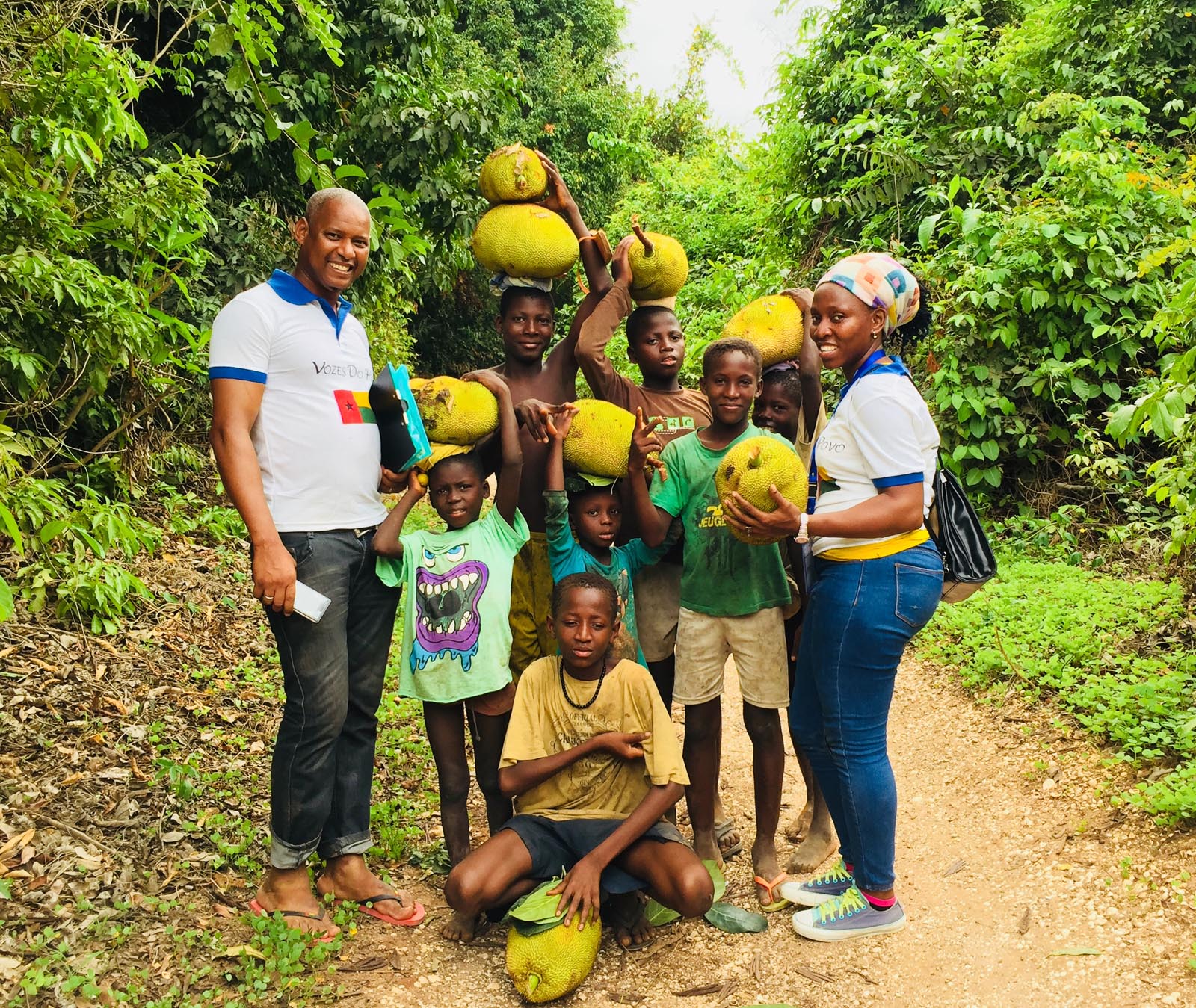
Fieldwork in Guinea-Bissau
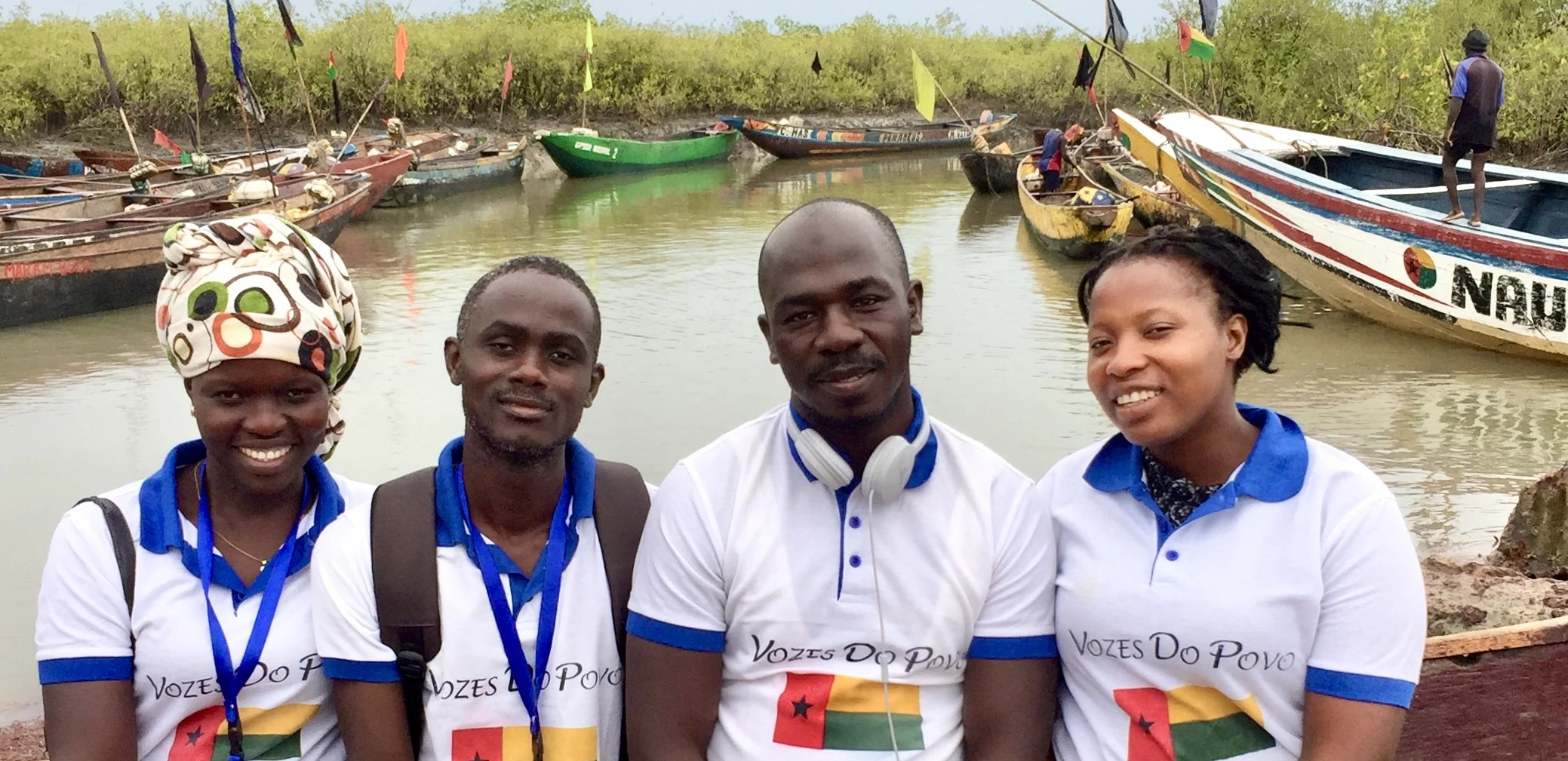
Ilha de Komo