On this page
A modest remedy
Years of labour. A study suppressed. A nation denied the study made to give it voice. DEMOS does not ask for a remedy on the scale of that harm. It asks for something far more modest — and squarely within what the European Union already agreed to.
Bring the book to its people. Let the English edition exist. Safeguard academic freedom. The first step is to keep the case alive.
1. Add your voice
Sign and share the petition.
Sign it, then pass it on. A message ready to copy:
The EU helped fund a study to give the people of Guinea-Bissau a voice, then blocked it. Restrictions remain. Public money should spread knowledge, not lock it away. I signed to defend academic freedom and help the book reach its readers. Will you join? vozesdopovo.org
Write to your representative in the European Parliament
A letter from a constituent carries weight. Ask your MEP to seek explanations and concrete action from the European Commission. You can adapt this template:
Dear [name],
I am writing as a constituent to ask for your help with the case of Voices of the People, Guinea-Bissau’s first national public opinion study. The European Union helped fund it, praised it, and then blocked its publication. It still restricts its distribution. The Portuguese volume may only be distributed free of charge. Just five copies have reached Guinea-Bissau. The English edition remains unpublished.
The European Ombudsman closed the inquiry in July 2025. The Decision reduced the case to a contractual dispute and offered no remedy. The central issue remained unaddressed: the censorship of a study designed to give citizens a voice and support their democratic aspirations.
Please ask the European Commission to explain why publication was blocked and to take concrete steps to bring the Portuguese volume to its intended readers and enable publication of the English edition. I also ask you to press for safeguards for academic freedom in EU-funded research.
The full documentary record is available at https://vozesdopovo.org. I would be grateful if you could keep me informed of any action you take.
Yours sincerely,
[Name]
[Town and country]
Ask for the documents
Any citizen of the Union, and anyone living or based in an EU country, can ask the Commission for its documents, without giving reasons. The Commission must answer within 15 working days. One document matters here: the Commission’s reply to the Ombudsman’s questions of January 2025, which DEMOS never saw.
I request access, under Regulation (EC) No 1049/2001, to the European Commission’s reply to the European Ombudsman’s letter of 13 January 2025 in inquiry OI/4/2024/MIK, and to the documents the Commission later supplied to the Ombudsman in that inquiry.
2. Bring the book to its people
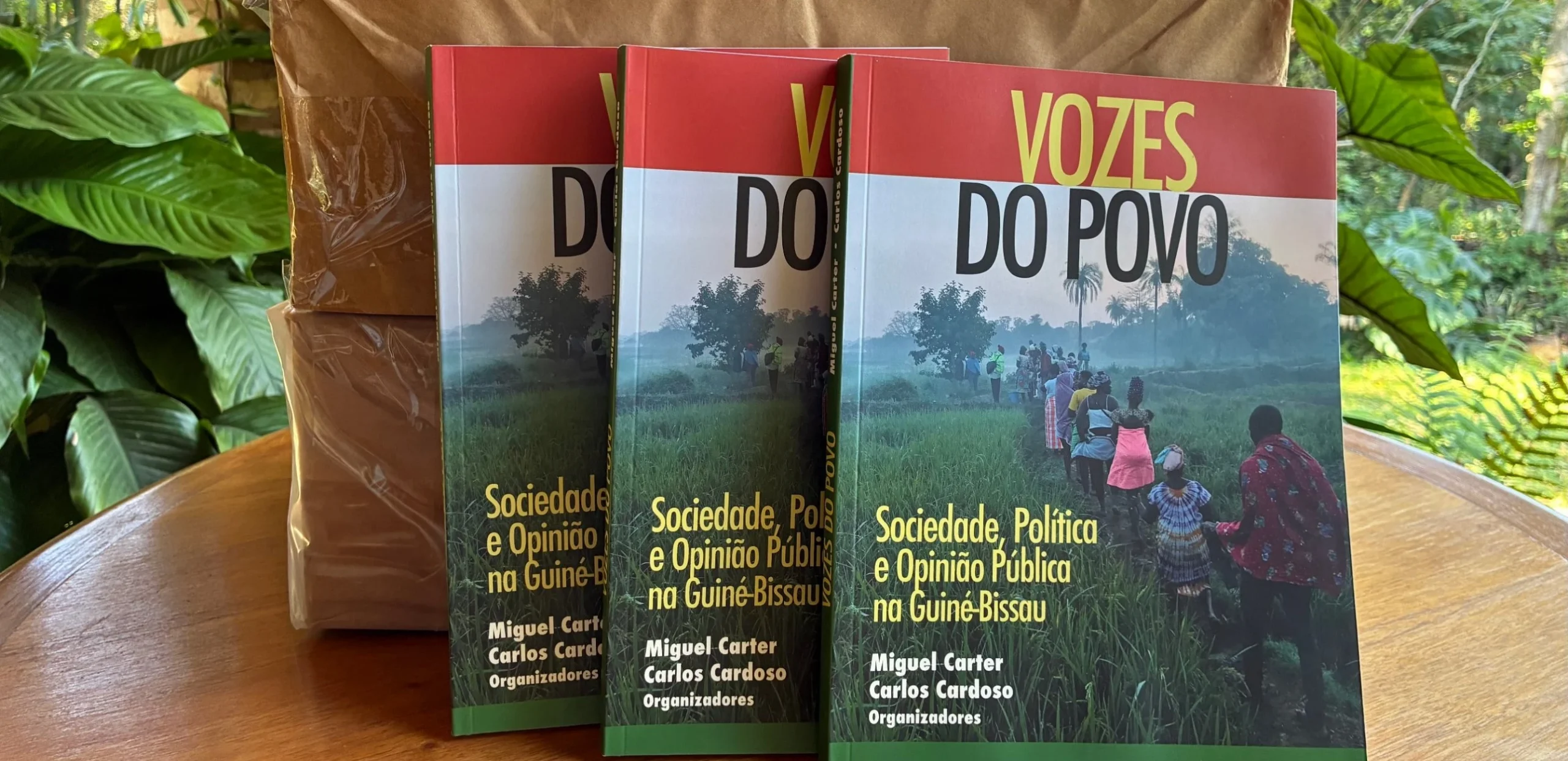
More than 300 copies of Vozes do Povo wait in Paraguay. Only five have reached Guinea-Bissau.
Our plan is ready. Send part of them to Lisbon. Present the book to the Bissau-Guinean diaspora in Lisbon, Porto and Coimbra, with universities as hosts. Carry the rest to Bissau, and present the book there, as the contract always envisaged.
The European Union should meet the cost: this is the completion of work it helped to make possible. Until it does, we welcome your advice, contacts and partners — hosts for a presentation, and help with transport.
3. Let the English edition exist
The English manuscript was completed in 2022, for an academic press, as the contract provided. Under the condition the Commission imposed in 2023 — that no copy may be sold — no academic press can take it on.
One route fits that condition: open access — a book free to every reader — with printed copies for libraries. In July 2024, the Ombudsman herself asked the Commission whether it could fund open access. It should, and the printed edition too. We welcome advice on presses, funders and partners.
4. Safeguard academic freedom
Civic vigilance
What happened to this study should not be possible — not in Guinea-Bissau, not in Europe, not anywhere. Knowledge censored abroad is knowledge unavailable at home. Freedom of inquiry and of expression rests on citizens who notice, and who speak up.
The historian Timothy Snyder drew twenty lessons from the twentieth century in defence of freedom. Six speak directly to this case:
Follow Guinea-Bissau
In August 2025 the authorities expelled the Portuguese news agency Lusa and the public broadcasters RTP and RDP, and closed their offices in Bissau. Independent sources matter more than ever.
Defend academic freedom
On our wish list
Both campaigns — the books and the English edition — are on our wish list. We will launch them when support allows. If you can offer insight, contacts or resources, write to us.
Write to us